

From Cappadocia to Ephesus and legendary Troy
Discover Türkiye’s great Greco-Roman sites, early Christian heritage and remarkable landscapes.
THE CLASSIC SPLENDORS OF WESTERN TURKEY
DAY 1 - DEPART USA
Arrive in Istanbul the next day before noon and continuing to Ankara the same day.
Day 2 - ANKARA ( Fly )
Arrive to Ankara, Turkey's capital, by plane and then proceed to check-in to our hotel. The tour starts with checking-in to the hotel in Ankara. The welcome dinner will be at the hotel.
Day 3, 4, 5 – CAPPADOCIA
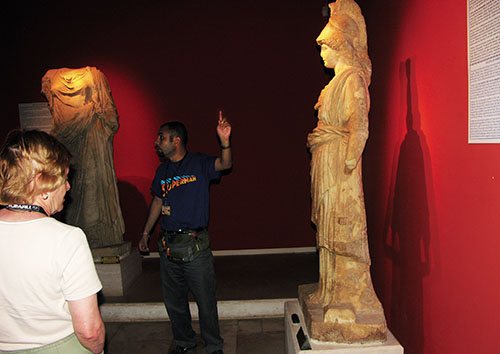
Early in the morning, you will visit the Mausoleum of
Mustafa Kemal Atatürk, the founder of modern Republic
of Turkey. You will visit the magnificent Museum of Anatolian
Civilizations. The museum of Anatolian Civilizations is one
of the most beautiful and richest museums in the world
with regard to its exhibits.
Afterwards, you will depart
for Cappadocia.
Cappadocia is a strange
region, created by
vulcanoes and erosion,
with beautiful sights. In
Cappadocia you will visit
the unique landscapes of
wind and rain eroded,
volcanic rock formations
and visit the amazing
underground churches carved into the rocks by early
Christians.
OPTIONAL: Hot air balloon rides over Cappadocia is optional. A balloon ride in Cappadocia (for people of all ages) is safe and nothing less than spectacular.
Day 6, 7 - MERSIN/OLBA
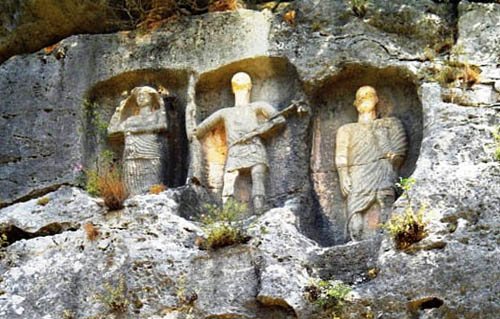
You will cross the beautiful Toros Mountains on the way
to Tarsus, the birthplace of St. Paul. In Tarsus, you will
visit St. Paul's well and the foundations of his house.
Your next day will start with visits to the underground
cistern in Tirtar, the huge chasm in Kanlidivane (Neopolis)
with the world’s first legally built churches from the 4Fr
century around the chasm and other photo opportunities
in this little visited coast. Here, you will see a 2,300-yearold
temple of Zeus, which is the oldest example of
Corinthian order in Turkey, visit the Temple of Tyche, a
small Greek theatre, the monumental Gateway and the
ancient Nymphium, a water fountain.
Day 8, 9 – ANTALYA
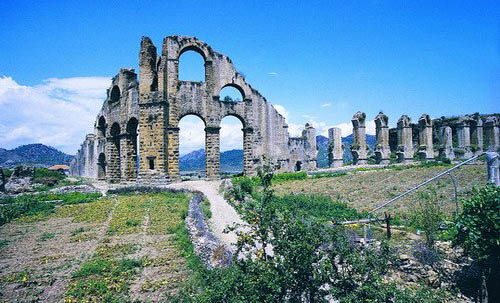
You will take a drive, following the virgin southern coast of the Mediterranean to Antalya. Situated on a cliff over the Mediterranean, Antalya is surrounded b y m o u n t a i n s . Developments in tourism, starting in the 1 9 7 0 s , h a v e transformed the city into an international resort. With its airport and central location, Antalya is a gateway for the Turkish Riviera and many historical sites. In the 1st century BC, the Pergamum king Attalos II ordered his men to find "heaven on earth". After a long search all over the world, they discovered this land and said "This must be 'Heaven' " and King Attalos founded the city giving it the name "Attaleia" which later became Adalia and then Antalya. During your stay in Antalya, you will tour the city as well as visit the ruined sites of Aspendos and Perge. Aspendos dates back to the time of the Hittites, yet the only visible remains are left over from the Roman Period. The restored theatre at Aspendos is said to be the best in all of Turkey. Perge is the best example of a complete Roman city in the Pamphylian plain.
Day 10 - PAMUKKALE - Hierapolis, (Aphrodisias)
You will depart
Antalya early and
drive to Aphrodisias,
the city of art
dedicated to the
Goddess Aphrodite.
Octavian once said
that “of all the cities
in the world,
Aphrodisias is my
f avorite.” The
marble theatre is beautiful and the stadium that seats
over 35,000 is immense. It is also the largest in the world
and the best preserved.
After Aphrodisias you will
continue to Pamukkale.
Another Greco-Roman city
"Hierapolis" is visited here.
It has an incredible
necropolis (city of the
dead) and you will see
many sarcophagi (burial
monuments). You will visit
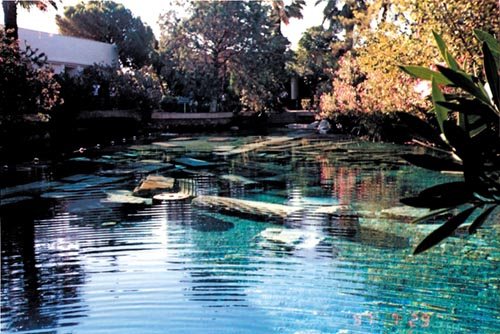
the snow-like travertine of
calcium for which
Pamukkale is famous. Pamukkale is one of the natural
wonders of the world with strikingly beautiful mineral
springs clinging to the hillsides that will amaze you.
Day 11, 12 - KUSADASI (Sardis/Ephesus)
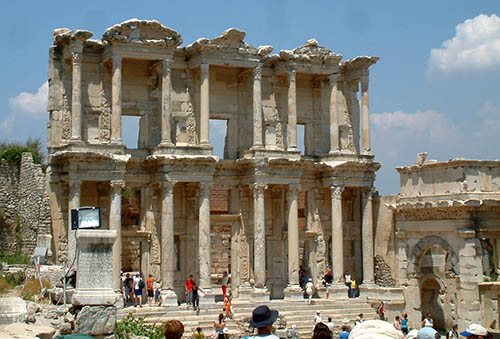
Today you will drive to
Sardis, where money
was first minted. You
will see one of the
w o r l d ' s o l d e s t
synagogues in Sardis
as well as the
excavations, the
gymnasium, and the
Artemis temple. Then
you will drive two hours to Kusadasi.
The next day you will see the incredible city of Ephesus
and its colossal Greco-Roman Theatre where St. Paul
preached. This particular theatre is still used for
performances today. The Marble Road, the Celsus Library,
and the Temple of Diana are just a few of the sites you
will visit. You will also visit the house where St. Mary lived
her final days.
Day 13 - CANAKKALE (Troy)
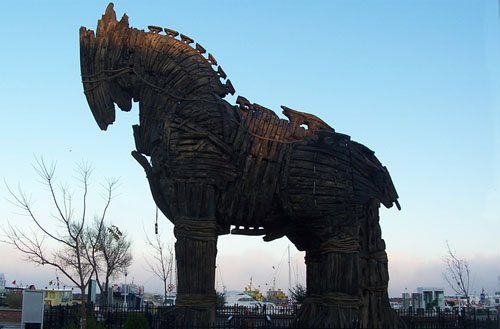
During a scenic two-hour drive up the Aegean Coast,you will stop in Pergamon to see the Asklepion, an ancient hospital complex. You will then visit the legendary city of Troy. Troy is a legendary city and center of the Trojan War, as described in the Epic Cycle, and especially in the Iliad, one of the two epic poems attributed to Homer. Trojan refers to the inhabitants and culture of TroAncient Greek historians placed the Trojan War variously in the 12Fr, 13Fr or 14Fr century BC: Eratosthenes to 1184 BC, Herodotus to 1250 BC, Douris to 1334 BC. Here, you will have the opportunity to see a replica of the Trojan Horse. To date nine different Troy's have been discovered, all built one on top of the other.
DAY 14, 15, 16 - ISTANBUL
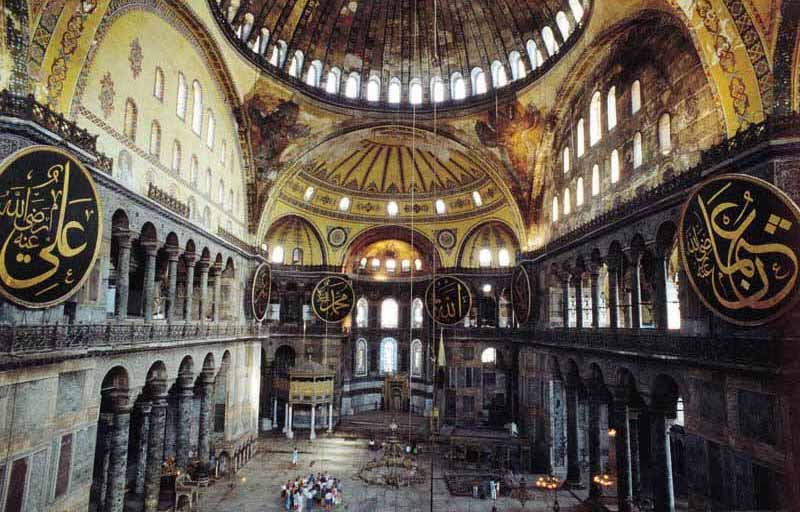
You will start your tour in Istanbul in the morning. Istanbul is Turkey's most populous city, and its cultural and financial center. The city covers 25 districts of the Istanbul province. It is located on the Bosphorus Strait, and encompasses the natural harbor known as the Golden Horn, in the northwest of the country. It extends both on the European (Thrace) and on the Asian (Anatolia) side of the Bosphorus, and is thereby the only metropolis in the world which is situated on two continents.
In its long history, Istanbul served as the capital city of the Roman Empire (330-395), the Byzantine Empire (395-1204 and 1261- 1453), the Latin Empire (1204- 1261), and the Ottoman Empire (1453-1922). The city was chosen as joint European Capital of Culture for 2010. The historic areas of Istanbul were added to the UNESCO World Heritage List in 1985.
DAY 17 – DEPART FOR USA
Early in the morning, you will be taken to the airport for your return flight to the United States, arriving the same day.